
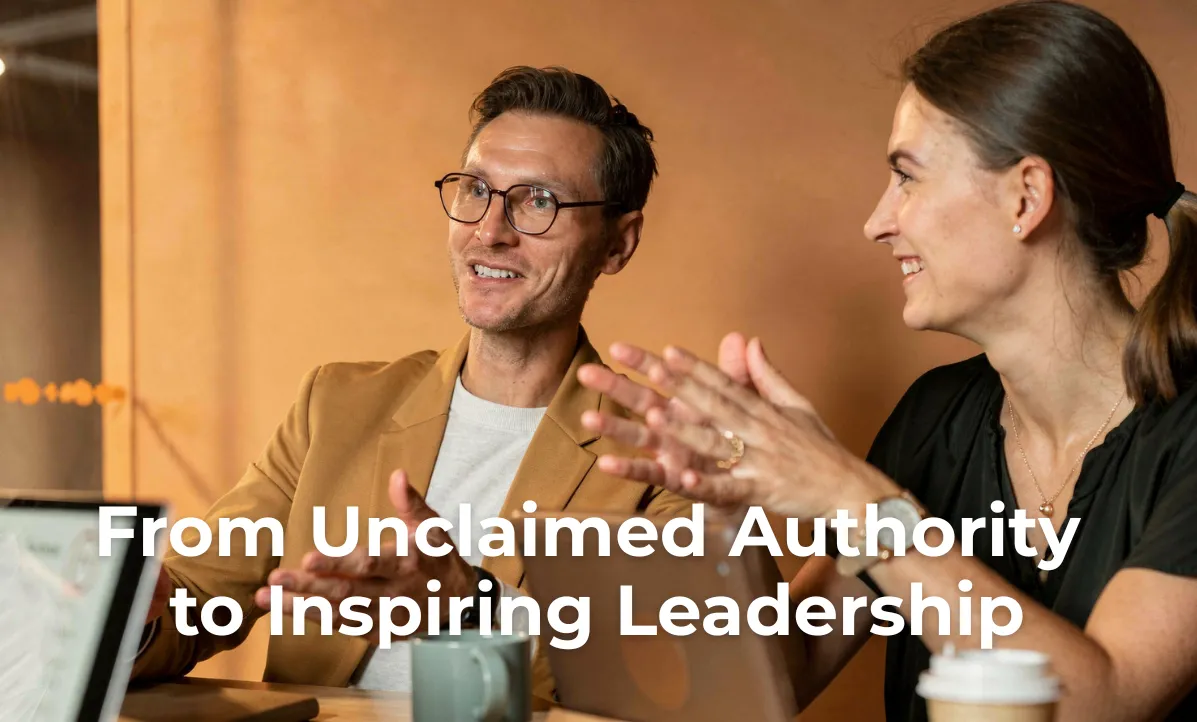
When expectations shift faster than confidence, authority and judgement evolve, capability quietly fractures.
The Leadership Transition Gap
Leadership failure in organisations rarely breaks because people lack intelligence, effort or technical capability.
It breaks when responsibility expands faster than a leader's internal authority, judgement and confidence can evolve..
High Performers are promoted into leadership roles before their internal leadership architecture has fully caught up.
On the surface, leaders appear capable and committed.
Underneath, confidence wobbles, decisions slow, influence narrows and pressure accumulates.
None of this looks like failure.
But over time, it becomes expensive.
The Hidden Cost of Leadership Transitions
Leadership transitions are rarely recognised as the root cause ... yet they sit beneath many of the leadership challenges organisations try to solve.
When leadership transitions go unsupported, the impact rarely shows up as obvious failure.
Instead, the pressure is felt first by the leader.
confidence narrows
decisions become heavier
control tightens
energy drains under the weight of expectation
Many capable leaders quietly question themselves at the very moment the organisation needs clarity and direction most.
Over time, the impact spreads. Across the organisation it begins to affect:
decision quality and pace
team confidence and engagement
collaboration across teams
client trust and experience
succession and long-term organisational value
Left unaddressed, these transition gaps compound … creating performance drag that extends well beyond the individual leader.
Leadership Growth Happens Across Three Domains
As responsibility expands, leadership capability must evolve across three interconnected domains.
Leadership begins with internal authority.
Leaders must strengthen confidence, judgement and decision-making under uncertainty – recalibrating how they see themselves as expectations shift beyond technical expertise.
As Leaders take responsibility for peiople and performance, they must influence, develop and align others – not simply rely on expertise or positional authority.
Leadership becomes relational.
At senior levels, Leadership expands beyond teams into the larger Organisation. Strategic thinking, commercial judgement and long-term value-creation become central responsibilities.
Together, these domains form the foundation of leadership depth the firm can rely on - now and into the future.
Most leadership development begins with behaviour.
Communication Skills
Management Techniques
Leadership Styles
Behavioural development cannot replace the internal leadership shift required when responsibility expands.
When high performing professionals step into broader leadership roles, the shift is not simply behavioural.
It's a transition in identity.
From expert to authority
From certainty to ambiguity
From individual contributor to organisational responsibility.
When this transition is not recognised – or deliberately supported – leaders often find themselves navigating unfamiliar expectations without the internal foundation leadership requires.
Leadership transitions require a different kind of development — one that strengthens identity, authority and judgement as responsibility expands.
Leadership capability does not expand through isolated workshops or leadership events.
It strengthens as leaders encounter increasing responsibility – and build the authority, judgement and perspective required to operate at that level.
Leadersihp transitions are the moments where that strengthening either happens deliberately ... or is left to chance.
Purpose to Profit works with organisations to strengthen leadership capability at the moments responsibility expands, helping leaders grow into their broader roles with confidence, credibility and strategic intent.

Leadership capability strengthens when three dimensions develop together:
Legitimacy: The leader is seen – by self and others – as credible in the role. This includes the internal shift from expert to authority and the external capacity to hold trust, influence and leadership presence.
Capability: The leader develops the judgement, behaviours and leadership range required to operate effectively as responsibility expands. This includes leading self, leading others and leading with increasing maturity under pressure.
Impact: The leader's contribution extends beyond personal performance into broader organisational outcomes. Decisions, influence and leadership begin to shape people, performance, culture and the long-term strength of the organisation.
Together, these dimensions strengthen leadership capability across the three domains of leadership growth:
Lead Self. Lead Others. Lead the Business
Rather than assuming leaders will naturally adapt as expectations rise, this approach strengthens leadership deliberately ... developing leaders who can carry responsibility with credibiity, capability and meaningful impact.
Organisations typically engage with Purpose to Profit when leadership responsibility is expanding and there is a desire to strengthen leadership capability deliberately rather than leaving it to chance.
Work is tailored to the organisation’s context, leadership structure and stage of development, and may include a combination of immersive experiences, leadership development programs and executive advisory work..

Leadership Transition Experience
An immersive leadership simulation designed to surface the hidden pressures and decision dynamics leaders face as responsibility expands.
Participants experience the leadership transition in real time — revealing how leaders think, decide and relate under pressure.
The experience exposes patterns in authority, judgement and influence that often remain invisible in traditional leadership development.
These insights then become the foundation for targeted leadership development across Lead Self, Lead Others and Lead the Business.

Leadership Development Programs
Structured development supporting leaders across Lead Self, Lead Others and Lead the Business,

Executive
Coaching
Advisory support for senior leaders navigating complex leadership transitions.
Keynotes &
MasterClasses
Thought-leadership sessions introducing the leadership transition lense to organisations
This work is for professional services firms that want:
Broader Leadership Thinking
Develop leaders who think and act beyond their individual practice
Stronger Leadership Confidence
Strengthen leadership confidence and engagement at senior levels
Future Leadership Pipeline
Build a strong pipeline of future leaders
Greater Collaboration and Client Value
Improve collaboration, client experience and cross-practice contribution
Sustainable Growth and Culture
Grow sustainably while preserving culture and long-term legacy
Leadership transition risk is rarely obvious – until it begins affecting performance.
Engagements typically begin with a confidential exploratory conversation to understand:
where leadership transition pressure may exist
how it may already be showing up
whether a focused leadership transition approach would add value
No prescriptions. Simply clarity.